May 23rd, 2013

Airtel Plaza Food Truck Lot


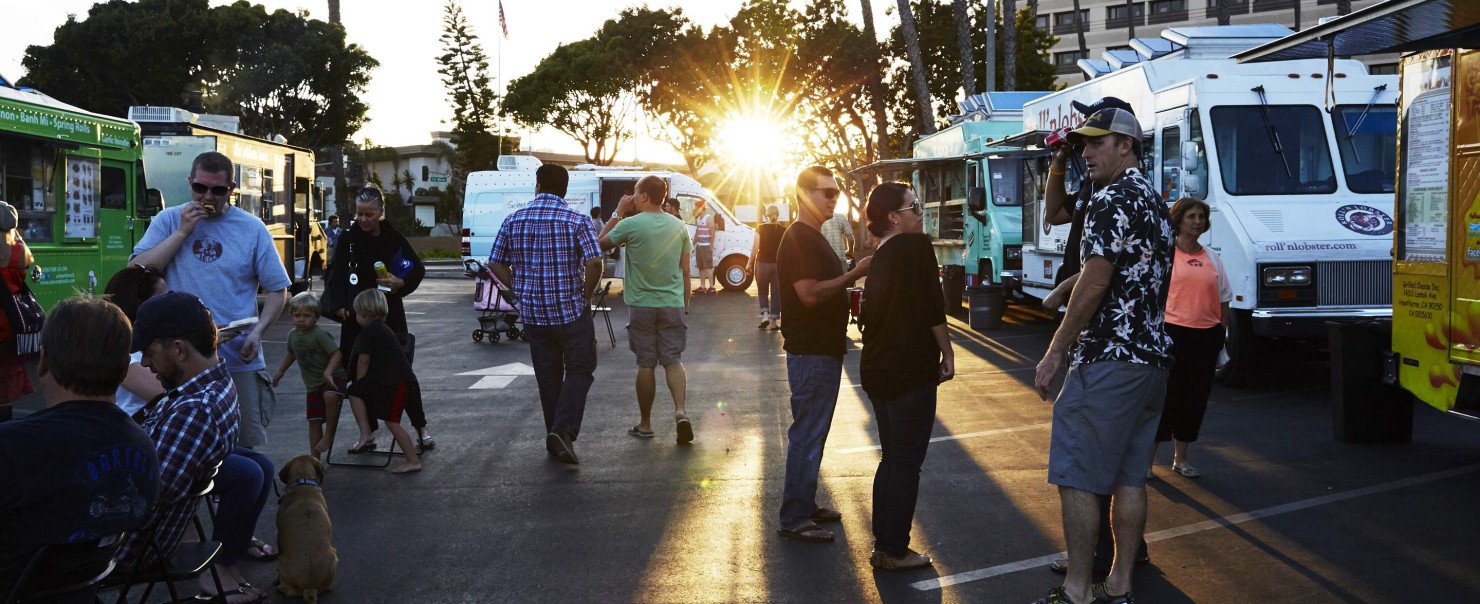
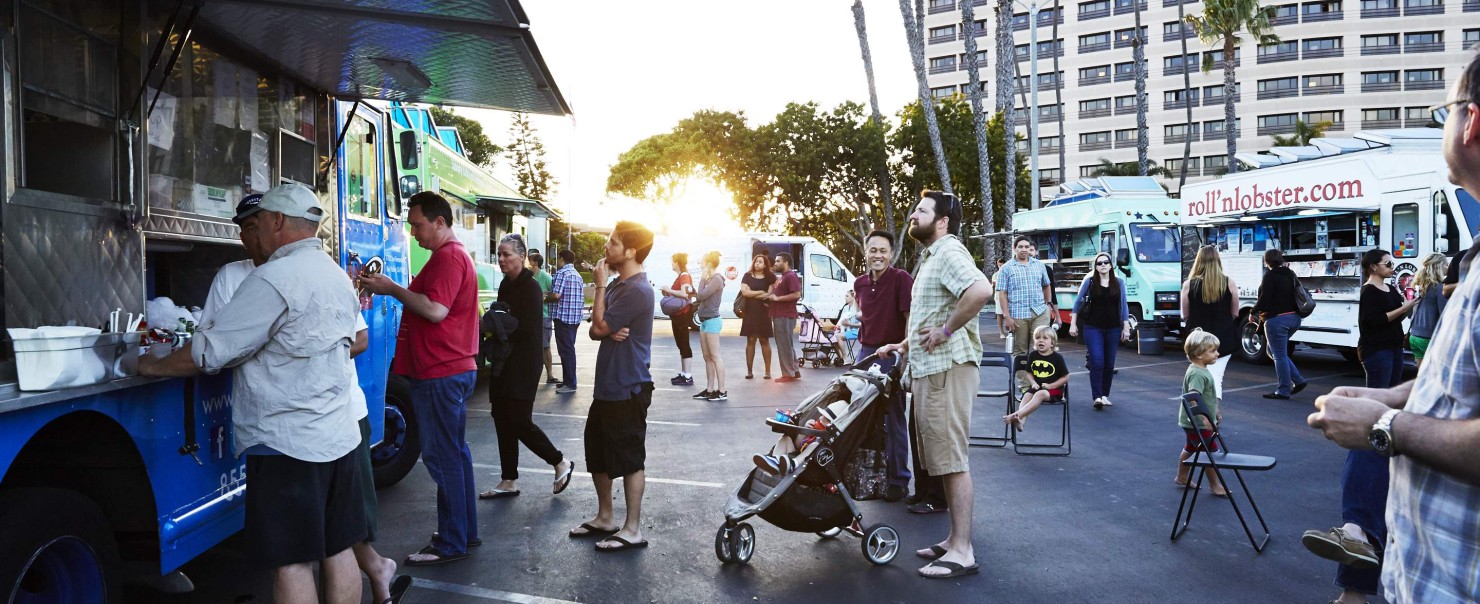
The Airtel Plaza Food Truck lot is BACK!!!!

The best happy hour and the best trucks in the Valley every Wednesday night starting June 5th!

Check the Schedule here: https://lotmom.com/lots/profile/42

June 5th Trucks will be:

Baby’s Bad Ass Burgers
Tainamite
Palazzolo
La Frite Express
No Jodas Cuban

7277 Valjean Ave., Van Nuys, Los Angeles, CA 91406.

image001

April 11th, 2013

Food Truck Fundraisers

Food Truck Fundraisers for non-profits

The SoCalMFVA can help you get your school, church or nonprofit organization plan a food truck fundraiser. We have assisted many nonprofits in booking trucks, handling regulations, and assisting with promotions.

We have been running a food truck fundraiser for the California Heritage Museum in Santa Monica since September, 2010.  To date we have raised over $120,000 for the museum by booking food trucks every week on their property.  The event has become a mainstay of the Santa Monica community.  Read about it here:

If you’re interested in starting a weekly, monthly or quarterly food truck fundraising event, please email us at socalmfva@gmail.com.  Please include the organization you would like to fundraise for, the City where you would hold the fundraiser, and how many people you expect.  We will get back to you shortly.


Food Truck Fundraisers

California Heritage Museum Fundraiser-4-9-2013

April 3rd, 2013

Food trucks can now roll through Lawndale

 
By Brian Charles, Staff Writer @JBrianCharles on Twitter Daily Breeze
Posted: DailyBreeze.com


Check Lawndale off as another city that has abandoned an antiquated ordinance restricting food trucks.

The city joins Torrance and El Segundo among the South Bay cities that have drafted new food truck ordinances to adapt to the gourmet trucks so popular with foodies these days. In all three cases, the changes have been due to pressure applied by the Socal Mobile Food Vendors Association, an advocacy group for food truck owners.

In Lawndale’s case, the association filed a lawsuit against the city demanding changes to its food truck ordinance. The City Council responded in early March with a new ordinance giving all food trucks greater latitude.

“Lawndale did a pretty big overhaul. The items we were complaining about were the 10-minute time limits and they had a curfew on food trucks,” said Kevin Behrendt, a partner with Dermer Behrendt, the law firm representing the Socal Mobile Food Vendors Association. “The city removed both of those restrictions. ”

Now food trucks can operate any day of the week and don’t have to relocate every 10 minutes as required under the old ordinance, a Lawndale city official said Tuesday.

The lawsuit did not seek monetary damages, according to court documents.

Lawndale didn’t have a food truck problem, according to Deborah Holland, Lawndale’s municipal services manager. City officials estimate only about three of the mobile eateries hold permits to sell chow in Lawndale city limits. What Lawndale had was an ordinance problem.

“We just wanted to be consistent with state laws,” Holland said.

To read the rest of the article go to The Daily Breeze.

March 20th, 2013

Classifieds

We have added a classifieds section to our site.  We thought it would be nice if trucks and people servicing trucks had a place to post their jobs, goods and services.  The Association does not endorse any of the items or services in the classifieds.

Please post responsibly.


March 14th, 2013

Bringing Food Trucks to you

Food Trucks

The SoCalMFVA was the first group to organize and bring food trucks to office buildings in Los Angeles.  We have continued to schedule trucks for lunch time service around the Los Angeles area.  We ensure that you have a rotating variety of cuisines that offer fast and friendly service.  There is no cost to cost associated with this service.  If you’re interested in setting up a food truck lot at your office, please contact us at socalmfva@gmail.com.

We can bring a food truck to you, daily, weekly or monthly.  We have a wide selection of cuisines to choose from and we let you pick the trucks you want to use.

Food Trucks


March 6th, 2013

Protectionism

It seems like every day I read another article about a city somewhere in the United States that has decided that their constituents needs are best served by limiting competition through unfair food truck laws.  It always starts off with a mayor, or a city council person proclaiming that they have to protect local restaurants from competition.  Maybe they should start protecting their constituents from businesses that don’t want to compete for their dollar.  When a city decides that they want two segments of the food service industry to negotiate how best to split the consumer dollar, they are doing their city a disservice.   This type of negotiation is usually called “compromise” by city officials, but to the average consumer it looks more like collusion.  A city government should not tell it’s citizenry how and where they should spend their money.

In 1979 a California appellate court ruled; “ we conclude that section 80.73(b) 2A(2)(bb) (100 foot buffer zone) is a “rather naked restraint of trade,” and determine that it is “ . . . arbitrarily made for the mere purpose of classification.”  In other words, the court found that the 100 foot buffer zone was unconstitutional.  Regulations must be made to serve the public good.  A city must show that there is a rational basis for the regulation.  Restricting competition does not serve the public good.

If you’re a food truck operator, or a a food truck fan, it’s important to control the message.  When a city official says food trucks engage in “unfair competition”, explain to them that you’re concerned with “consumer choice,”  Ask a city official if they’ve tried to ban pizza places from delivering pizza near restaurants.  Inquire about how the city tried to limit Netflix deliveries by Blockbuster Video stores.  Ask why they think competition is unhealthy for the market place.

Competition is good for your community.  Restaurants have an incredible advantage over food trucks.  Shelter, seating, alcohol and on-site restrooms are hard to compete with.

-Matt Geller
CEO SoCal Mobile Food Vendors Association

February 24th, 2013

Brief: Food trucks meet retail

Reposted from the Santa Monica Daily Press

The California Heritage Museum is debuting a new weekly community event entitled Tuesday Night Food Truck Bazaar.

There will be 10 food trucks serving everything from fish tacos to lobster rolls, and even Korean barbecue.

The weekly event, which takes place in the parking lot of the museum, will rotate trucks each week in the hopes of equally representing every nationality possible.

Starting Feb. 26, the museum will add a bazaar on its lawn next to the food trucks where attendees can purchase children’s clothes and toys, yoga and gym clothing, sculptures from Bali and surf and snow boards.

The Victorian restaurant is open so that guests who purchase from the food trucks can eat their dinner in the outdoor patio, the indoor first floor bar, or the downstairs basement bar free of charge.

Parking is available within the museum’s lot. For additional information, visithttp://www.californiaheritagemuseum.org.


February 1st, 2013

SoCalMFVA in 2012

Making Strides for the Food Truck Rights

2012 was a busy year for SoCalMFVA.  We faced challenges from everywhere, the state, the County and many of the 88 cities within LA County. We met all those challenges and ended the year as strong as ever by expanding on food truck rights. However, the opponents of mobile vending are gearing up for another fight. 2013 will be our most important year yet to ensure mobile vending remains unencumbered by anticompetitive regulations.

The Association had some major successes in 2012. Most notably on the county level was our cooperative work with the Los Angeles County Health Department that resulted in the repeal of the bathroom letter requirement and the expansion of food truck rights.  The repeal was part of a overhaul of the County’s food truck policies and procedures that were brought on by the hard work of the Association.

On the litigation front, the Association filed nine new lawsuits against Los Angeles County cities. So far eight of those cities have agreed to revise or repeal their restrictive mobile vending rules, including: the City of Industry, Arcadia, and South Pasadena who each previously prohibited mobile vending. In addition, the cities of Lawndale, Carson, Artesia, Compton, and El Segundo have agreed to revise their restrictive regulations to do away with time-limits rules. The City of Monrovia, after fighting the Association for nearly a year and a half finally agreed to repeal and revise their uber restrictive rules. The Association continues to work with cities informally to make sure our member’s rights to be free from illegal and nonsensical regulations are respected.

On the State front we fought a very restrictive health ordinance.  AB1678, would have prohibited food trucks from operating within 1500 of any school in the state. By partnering with other stakeholders statewide we defeated that bill before it went to committee.

We will continue to fight for the rights of food trucks and the consumers who love them in 2013.

Thanks for all your support.

January 21st, 2013

Americans Support Food Freedom by a Wide Margin

-by Baylen Linnekin (posted from Reason Magazine)


A new poll finds Americans oppose food bans by a 5-1 margin and food taxes by a 2-1 margin. Supporters of food freedom should take note—and maybe even a victory lap.

A new poll finds Americans have little stomach “for policies that would constrain consumer choices…such as limits on the amount or type of food that can be purchased or taxes on unhealthy foods or drinks.”

Respondents expressed universal opposition to food bans and taxes. While opposition to bans on marketing “unhealthy foods aimed at children” only trumped support slightly, opponents of taxing those same foods outnumbered supporters by a nearly 2-1 margin, and those who opposed “[l]imiting the types or amounts of foods and drinks people can buy” outnumbered supporters of food bans by a startling 5-1 margin (74 percent to 15 percent).

Furthermore, when asked whether maintaining a healthy weight was something “the whole community, including the schools, government, health care providers, and the food industry should deal with,” less than one-third of respondents favored that approach, while 52 percent stated this was “something individuals should deal with on their own.”

The study reveals 97 percent of respondents believe the most likely cause of obesity is sedentary inactivity related to “TV, video game[s] and computer[s].”

While I don’t claim to know the root cause(s) of obesity, this strong belief among respondents that Americans are obese because we sit on our butts too much has been echoed by research. For example, in a 2005 article in the Annual Review of Public Health, “Economic Causes and Consequences of Obesity,” researcher Eric Finkelstein and his colleagues looked at the results of four previous obesity studies and found “[t]he published evidence, although not conclusive, suggests that technology may be primarily responsible for the obesity epidemic.”

Amazingly, the very same study by Finkelstein was later used as the sole scientific basis of New York City’s soda ban.

When I filed comments this past summer on behalf of Keep Food Legal and its members in opposition to the ban, I blasted it in part because, I wrote, “the only evidence” New York City’s health department had cited as a basis for the proposed ban was Finkelstein’s “2005 Annual Review of Public Health journal article” which, I argued, “might better be used to support a ban on iPhones, televisions, or public transportation.”

While the AP/NORC poll can be used to further bolster the case for food freedom against disingenuous, restrictive policies like that adopted in New York, it also provides a welcome counter to some recent frank research with which I nonetheless have taken issue.

In a column last summer, I expressed skepticism over the results of a survey research paper authored by Prof. Jayson Lusk, who concluded “that a majority of respondents can be classified as ‘food statists’… who support ‘more government action in the realm food and agricultural relative to the status quo.’”

I offered largely anecdotal opposition to Lusk’s conclusion, writing that “people who champion food freedom… make up a much larger percentage of the population than this research would indicate.”

While I didn’t need a poll to tell me that what I see every day in my own work reflects a larger consensus across the country, I’m nonetheless grateful that the AP/NORC poll results do reflect this reality. And though the poll has so far received little fanfare beyond an AParticle (hardly unexpected), I believe the poll results are a welcome shot in the arm for supporters of the food freedom movement—and a shot across the bow of its opponents.

Those opponents are legion in academia, public health, and the media.

Two days after the AP/NORC published its poll results, an op-ed calling for increased regulation of the food supply appeared in the San Francisco Chronicle.

The author, Dr. Robert Lustig, urged the FDA to cap the amount of added sugar that can appear in any foods. (page 2)

November 2nd, 2012

New Scheduling System: LotMom

We are retiring our Google Calendar schedule in favor of a more robust system.  Starting next week all of our lot schedules will be on LotMom.  Following your favorite trucks just got easier. With lotmom, we can serve you real-time information about all the best truck lots.  http://lotmom.com

For Trucks

LotMom provides the tools to keep your food truck rolling. With LotMom, you can manage your regulatory filings, book your truck at events, or pick up tips from community members who have traveled the same road.You can also stay connected to your followers through our real-time integration with twitter, facebook and our own consumer facing platform. At LotMom, we focus on your business so that you can focus on your food.

For Lots

Book, schedule and manage trucks on your lots without the hassle. LotMom allows you to complete your bookings with the push of a button, and gives you total control over how your lots are managed. With LotMom, we do the hustling so you can keep your lot full of your favorite trucks and satisfied customers.

For Everyone

Following your favorite trucks just got easier. Because food trucks and lots use LotMom to manage their schedules, we can serve you real-time information about all the best trucks and lots. You just tell us “Where”,”When”, and “What”, and we’ll find the trucks and lots to feed your hunger.

September 26th, 2012

The Airtel Plaza Hotel lot/Van Nuys Airport lot

The association and The Airtel Plaza Hotel are proud to present “Runway Eats!” for dinner every Wednesday, 5pm to 9pm at 7277 Valjean Ave, Van Nuys, California 91406.  This is our very first gourmet food truck lot in the San Fernando Valley for Association.

What’s special about this lot is, it is right next to the Van Nuys Airport’s runway – in which you can see planes take off right away as you and drink. Yes, did we mention drinks too? Alcoholic beverages will also be served, provided that you have proof that you are over 21 years old. But aside that, this is also a very family friendly lot, pets are also welcomed!

Family dinner

Our first event for this lot started off last Wednesday on September 19, and we will be having our second event today. For today, we will have Baby’s Badass Burgers, Buttermilk Truck, China Jones(India Jones’ Chinese cousin), Dogtown Dogs, Holy Aioli, and AROCKin Hawaiian Shaved Ice. We will have approximately 6-8 trucks per week. You may also check out who’s on for the week at this link. http://socalmfva.com/aph/

The official website for the Airtel Plaza is http://airtelplazarunwayeats.com/. Do follow us on twitter too @theairtelplaza and facebook at https://www.facebook.com/AirtelHotel

So if you happen to be in the Valley, or if you are looking for something fun and relaxing, come down to The Airtel Plaza lot! Every Wednesday evenings!

-Yeyen Ong

August 24th, 2012

The Beach Eats Lot

The Beach Eats lot in Marina Del Rey is a welcome addition to the Marina Del Rey scene. Patrons come from all over the Westside to enjoy food from the seven scheduled trucks. The partnership with the County of Los Angeles Beaches and Harbors has worked out great. LA County has a great piece of land, the SoCalMFVA books the trucks, and the Marina residents come hungry for an eclectic mix of foods.

The Beach Eats lot will continue through October and maybe through the winter if there is demand. To see who’s going to be there every week, check out the schedule. Please follow the Beach Eats lot on twitter at @beachtrucks. If you want to see great pics of delicious food and food trucks, follow us on Instragam at beachtrucks!

20120824-090401.jpg

August 18th, 2012

Santa Monica Main St Lot

The Santa Monica Planning Commission is recommending a permit to allow food trucks on private property in certain areas.  The Planning Commission has thoughtfully put together great conditions for food truck lots in Santa Monica.

A small minority that opposes the Santa Monica Tuesday night Main Street is opposing the Planning Commissions recommendations in an attempt to stop the Tuesday night event on Main Street.  We need your help to save the Main Street lot Tuesday night event!

The SoCal Mobile Food Vendors Association pays a weekly fee to the Heritage Museum which has become a major source of income that pays for community programming.  So far the event has raised over $90,000 for the Museum.

WE NEED YOUR IMMEDIATE HELP!

1. Please… write a letter of support for ourTuesday night event. We have a unique venue which includes a picnic area on the lawn; patio dining at “the Victorian”; and a casual neighborhood bar at the downstairs “Basement”. Send the e-mail to the museum - calmuseum@earthlink.net, and more importantly, to the City Planning Department -Paul.Foley@smgov.net

2. Attend the Wednesday evening meeting at City Hall at 7:00 pm (Council Chambers) where some people may speak against the Food Truck event. We need people to speak for a minute in support of the trucks and what a great community event it is!!!

August 9th, 2012

Another Restroom Letter update

BE SURE TO READ THE FOOTNOTES!!! Bolded for your viewing ease!

Don’t forget to thank an Association member for fighting for the rights of all mobile vendors, food trucks and carts alike!

Restroom Facilities:

  • A truck doing business at one spot for more than one hour must operate within 200 feet of an approved restroom.1, 2
  • The restroom has warm water (100˚F-108˚F), single use soap, single use towels, and a trash container.
  • A truck that temporarily closes and stops doing business for 15 minutes within the one (1) hour period is assumed to be operating for less than one hour, and is not subject to the restroom requirement. But, the operator/employees must:
  • Stop food handling and properly store all pre-packaged and unpackaged food.
  • Post in plain view at the service window, the closed for business sign, the time of closure, and the time the business will resume.
  • Exit and remain off the truck for the minimum 15 minutes.
  • A truck that changes place before the one hour period is not subject to the restroom requirement, but must assure that:
  • The new spot is not within one half mile of the prior spot, or the new spot caters to a community of customers that are separate from the prior spot; and
  • The truck does not return to the prior business spot within 15 minutes of departing.

Commissary:

  • The truck is stored, cleaned, and serviced daily at a commissary or other approved facility.
  • All wastewater generated by the truck is emptied at an approved commissary or other approved facility. Wastewater is not released onto the ground.

Miscellaneous:

  • The driver has a valid California driver license in their possession.
  • The vehicle registration is kept in the truck.
  • The certified Food Protection Manager Certificate and/or Food Handler card is kept in the truck.

¹ As measured from the food truck to the entrance of the structure in which the restroom facilities are located.

² For operators who secure advanced access to restroom facilities, as documented by a fully-executed agreement between the operator and the owner of the restroom facility,    the distance requirement will be extended to 300 feet.

July 17th, 2012

Rest in Peace, David Shin of THE YUMMY ONE

Their best dish!

A dear friend and member of the SOCALMFVA, David Shin of The Yummy One food truck, just passed away several weeks ago. Mr. Shin was an excellent entrepreneur, chef and a fellow member. He is survived by his wife and daughter. We hope that David Shin’s legacy of hardwork, friendliness, honesty and sincerety will pass on to the rest of our SOCALMFVA family and the food truck industry. May you rest in peace, 신대걱. You will always be in our hearts.

-Yeyen Ong

July 12th, 2012

New Bathroom Letter Policies

After 10 months of negotiation, the Health Department has changed some of their policies concerning bathroom access.  The requirement for the bathroom letter, is no more.  The members remained committed to changing these polices, and should be applauded!

As of July 1, 2012, the County has agreed to:

  • eliminate the “bathroom letter” requirement in its entirety;
  • require trucks to show only “actual access” to a bathroom facility when operating for more than one hour at the same location;
  • provide an actual definition of “same location”; and
  • exclude suspension and truck closure as penalties for lack of bathroom access.

New Interpretation and Enforcement Policy:

  1. The County will no longer require Mobile Food Facilities to acquire a bathroom authorization form.  Mobile Food Facilities that are stopped to conduct business in the same location for more than one hour will only need to demonstrate “access in fact” to an approved toilet and hand washing facility within 200 travel feet of the truck.

To demonstrate “access in fact” an employee will have to walk the inspector into a bathroom within 200 feet of the truck.  If the bathroom has working toilets, warm water, and single use soap and towels, no bathroom violation will be issued.  A truck may still use a bathroom letter to satisfy the requirements of Section 114315; it is simply not a requirement.

1.   A truck that does not have bathroom access (either a “bathroom letter” or “access in fact”)  may not operate in the same location for more than one hour.  However, the County will no longer issue temporary suspensions or order immediate closures of trucks that operate for more than one hour without access to an approved toilet and hand washing facility.  To avoid a temporary suspension and immediate closure the truck must immediately cease operations at that location and move at least one half mile before restarting.  Further, the truck may not return to that location for the rest of the day.  The truck will still be cited for a violation and be docked 6 points if it is a graded inspection.  A truck that receives two violations within a twelve-month period will be subject to a permit revocation proceeding.   A truck that refuses to cease operations will be subject to a suspension and an immediate closure.

2.   A truck that voluntarily suspends business operations for a minimum of 15 minutes within a one-hour period will be presumed to be operating for less than one hour and are not subject to a restroom requirement.  A truck will be deemed to have suspended business operations only when the service window is closed and all employees have vacated the vehicle.  No sales may take place during this 15-minute period and all food must be properly stored.  Operators must place a “clock sign” in plain sight to customer indicating when the break began and when operations are scheduled to resume.

3.   A truck that does not have access to bathroom facilities that does not choose to cease operations pursuant to number (3) above may not operate for more than one hour at the same location.  However, a truck may continue operations under one of two scenarios:

a.   Move the vehicle at least one half mile from the prior location or

b.   Move the vehicle to service a different “community of customers.”  This means that truck moves far enough away from its previous location that its customers are different than the ones it was previously serving.  So as an example, customers two blocks down on Abbott Kinney or Chatsworth on a Friday night are likely not a different “community of customers.”  But customers on Hill and Fourth in Downtown Los Angeles are likely a different “community of customers” from the ones on Hill and First.

A truck that elects to continue operations under either option a. or b. may return to its previous location after fifteen minutes.

June 22nd, 2012

California Heritage Museum Partnership

Summer is back and the Main Street Lot at the California Heritage Museum is going strong.  Every Tuesday night from 5-9:30pm, 10-12 trucks line up in the parking lot of the California Heritage Museum and the Victorian (2612 Main St Santa Monica, 90405).  Patrons are invited to use the Museum lawn or grab a drink and a table at the Victorian bar or the Basement Tavern.  The partnership has benefited all parties involved and the Santa Monica community.  To date, the SoCalMFVA and our participating member trucks have raised over $80,000 for the California Heritage Museum.  The trucks have found a great home in Santa Monica and they’re excited to serve the community  throughout the Summer!

The truck schedule for the Main Street Lot is here. The twitter is @smfoodtrucklot.  Please check out the latest exhibit at the California Heritage Museum.  Our partners at the Victorian and the Basement Tavern have been very supportive of the museum and the trucks.  Please check them out next time you’re in Santa Monica!

April 6th, 2012

AB 1678 Will Not Proceed Further in 2012

On March 28, 2012 Assemblymember Monning wisely decided that AB 1678 should not proceed any further in the 2012 legislative process.  In a statement released by his office Assemblymember Monning said, “ The challenge before us is working with a diverse group of stakeholders to establish a shared understanding about the adverse impacts of these practices and the necessity of a statewide legislative solution.”

The sponsors of the AB 1678, The California Food Policy Advocates (CFPA) did nothing to reach out to impacted vendors or their advocacy organizations to include them in discussions.  Additionally, the CFPA did very little to collect data on specific instances where mobile vending directly led to adverse student impacts.  In fact, the CFPA, when asked, could not even provide the names of fifteen schools out of 10,000 in California where these issues existed.

As we have stated previously, many cities already have restrictions on mobile vending.  These restriction focus on public safety impacts related to attractive vehicles near schools.  AB 1678 would have criminalized selling a bag of chips from a food facility on four wheels while an adjacent liquor store could have legally sold the exact same bag of chips.  AB 1678 was an ill advised bill that did not address the real causes of childhood obesity and looked to scapegoat a group of hard working entrepreneurs.

We object to the CFPAs assertion in their March 28th press release claiming that mobile vendors are “targeting children” as if they were some sort of pushers attempting to fatten up children.  The CFPA should start looking into the root causes of the childhood obesity epidemic and stop targeting mobile vendors.

We look forward to working with the State to continue to further the rights of mobile vendors throughout California.

February 21st, 2012

AB 1678: Not Good for California

Please start by signing our petition:  http://tinyurl.com/AB1678

On February 14, 2012 Assemblymember Bill Monning (Carmel) introduced AB 1678, which would prohibit mobile vending 1500 feet from an elementary or secondary school from 6 a.m. to 6 p.m.  This Bill is flawed in many respects.  If enacted, the Bill would decimate the burgeoning mobile food industry without addressing the author’s concerns in any significant manner.   In many California cities, more than 80 percent of the public right of ways are within 1500 feet of a school.  Without suitable areas to operate a large number of mobile restaurants will be forced out of business.  Yet, even with food trucks out of business, children will have plenty of access to “unhealthy” food.  Even if one accepts the Author’s claim that students on closed campuses leave school to obtain unhealthy food, the Bill will do nothing to curb this alleged threat.  The Bill  does not purport to ban the sale of any particular type of food.  So fast food restaurants, convenience stores, and gas station stores will continue to operate within the restricted area offering all manner of “unhealthy” food.

In the last three years mobile vending has become one of the fastest growing trends in food service.  Restauranteurs have taken to the streets to deliver a wide variety of cuisines.  The mobile food facility is merely a delivery system used to service the public.  Many trucks pride themselves on providing organic healthy meals that come straight from the farmer’s market.  Even the trucks that do not promote their cuisines as health food often use only high quality ingredients in their food’s preparation.  This Bill does not differentiate between cuisines, only the delivery mechanism used by a restauranteur to serve the public.  Imagine the Bill had banned all restaurants with a drive through window from operation within 1500 feet of a school.  Healthy restaurants that wanted to service the public and provide a quick take out option would be prohibited from doing so just because of a service practice.  This Bill does not ban unhealthy food, it bans a service mechanism.
The Bill’s attempt to make a statewide prohibition to address local issues simply makes no sense.  A number of Cities and Counties already have rules prohibiting mobile vendors from operating near schools while in session.  Local school districts have rules prohibiting students from leaving campus.  The Author fails to make any showing as to why the State should make these broad legislative decisions when the local authorities already have the power to do so.  If enacted this Bill would even restrict schools from holding food truck fundraisers on campuses.

California is in the middle of any unprecedented financial crisis.  However, instead of using our limited legislative resources in an efficient manner, this Bill would put thousands of people out of work without actually addressing the issue of childhood obesity.  The Author claims to know what is best for every county, city, town, and school in the entire state.  This Bill will be defeated because Californians are smart enough to know there are better ways to address these issues without damaging an entire industry.

February 16th, 2012

Manhattan Beach

Last week, the Manhattan Beach City Council passed new food truck regulations that were fair, equitable and in compliance with California State law.  The new ordinance removed their previous 30 minute time limit and focused on regulations that would enhance public safety.  Ordinances for trash pick up, distance from an intersection and distance from schools were all included.  We’re happy that Manhattan Beach chose to work with the industry to ensure regulations that benefitted the community.  The City Council and the City Attorney took the time to weigh public safety concerns and State law requirements.  We’re looking forward to a constructive relationship with Manhattan Beach.